
Claude and AI assistants: being described accurately.
Assistants that answer from what they have read reward clarity and consistency. The risk is not only being left out; it is being described wrongly and never knowing.
Check your visibility free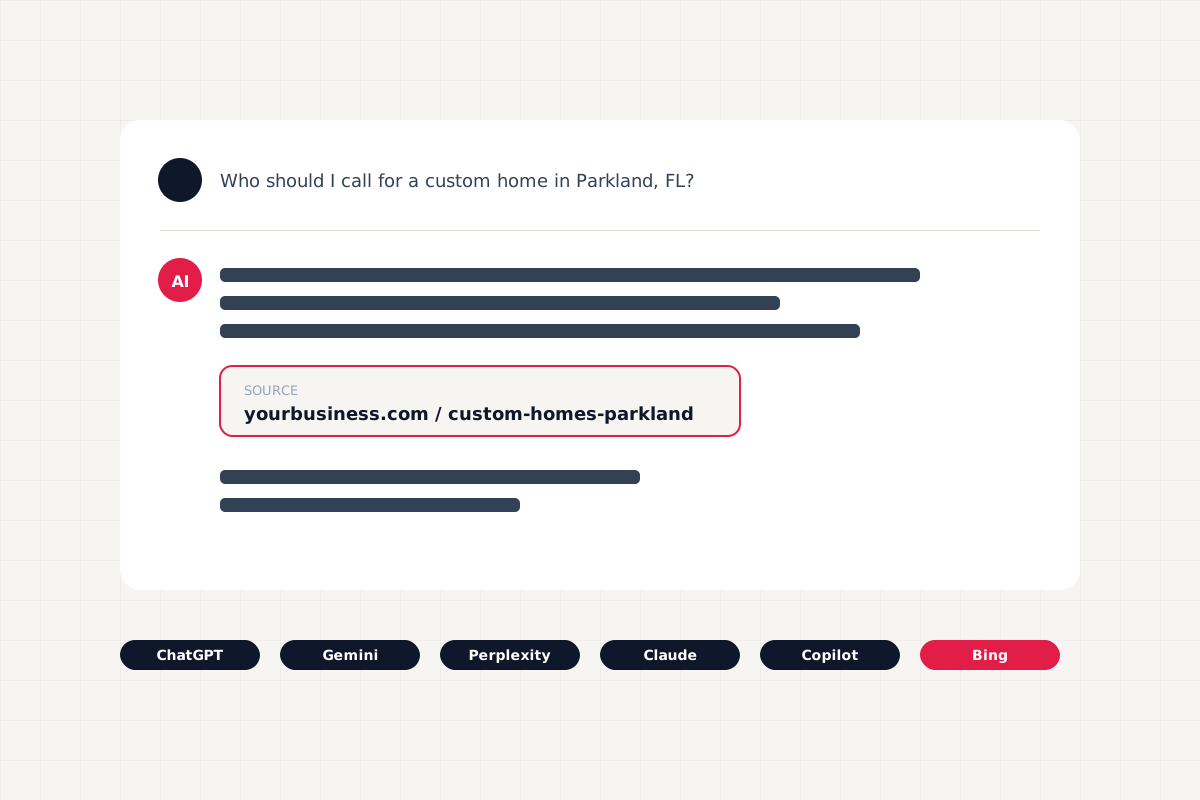
Key takeaways
- Does Claude browse the web? It can, depending on how it is being used. Either way, what it says about a business comes from what is publicly written about that business.
- What is the real risk? Being described inaccurately. An old address, a service you dropped or a competitor's claim can be repeated confidently to a customer who never checks.
- How do you fix that? One authoritative entity page, consistent facts everywhere, Organization and Person schema, and sameAs links to the profiles that corroborate them.
- How do you know what it says? We ask it. Your twenty buyer questions are run monthly and the answers are logged, including the wrong ones.
How does Claude choose who to cite?
- It answers from what has been written publicly about you, across your site and everywhere else.
- It rewards consistency: the same name, address, services and claims wherever they appear.
- It is sensitive to contradictions, and a site that disagrees with its own directory listings is a weaker source.
- It has no incentive to prefer your marketing language over a third party's plainer description.
- It will state something confidently even when the underlying source is out of date, which is the part worth watching.
What do we do about it?
- Build one entity page that states what the business is, where it operates, what it sells and who runs it.
- Install Organization and Person schema with sameAs links to the profiles that confirm it.
- Make the name, address and phone identical across the site, the Business Profile and the directories.
- Publish llms.txt and a Master FAQ so there is an obvious, current summary to read.
- Run the monthly question set and correct the sources behind any answer that comes back wrong.
Claude questions
Not directly, and anyone claiming otherwise is overselling. What you can control is the quality and consistency of the public material it reads, which is what the answer is assembled from.
We find it first by running the monthly questions, then trace the claim to its source. Usually it is a stale directory entry, an old page of your own, or a review site. Fixing the source is what eventually fixes the answer.
No. The work that makes you legible to one makes you legible to the others, because they are reading the same public material. The differences are in indexing and freshness, not in what counts as a clear fact.
No, and we will not pretend it is. It is an emerging convention the engines are not obliged to read. It costs little, cannot hurt, and puts you ahead if adoption grows.
Slowly, and unevenly. Models are retrained and caches refresh on their own schedules. Correcting the source is the only durable fix, and we report what changed rather than promising a date.